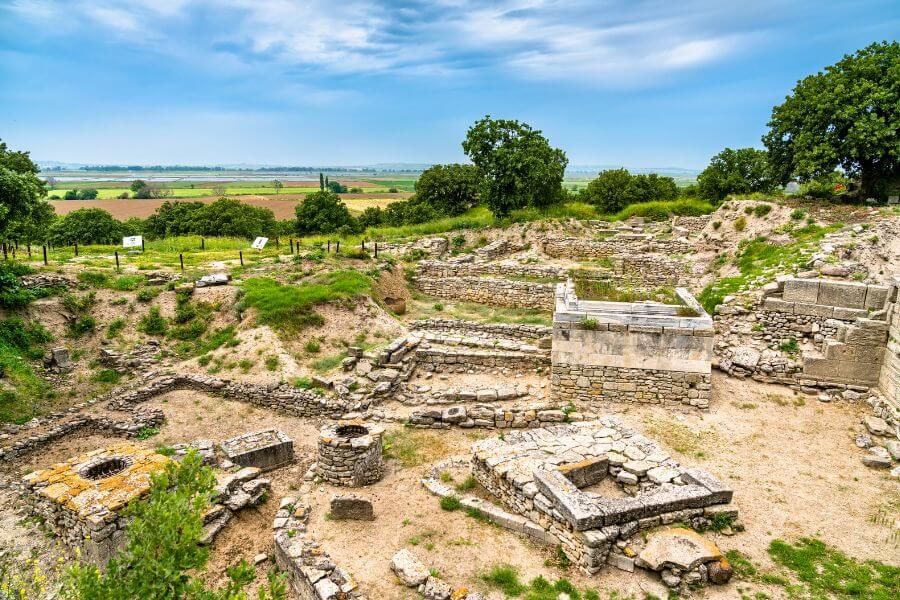
The Ancient City of Troy is one of Turkey’s most famous archaeological sites, celebrated for its connection to Homer’s Iliad and the legendary Trojan War. Located near Çanakkale in northwestern Turkey, Troy offers a fascinating mix of myth, history, excavated city layers, and visitor-friendly walking routes that make it an essential stop for anyone interested in ancient civilizations.
Table of Contents
- What is the Ancient City of Troy?
- What are the quick facts about Troy?
- Why is Troy so famous?
- What can you see at the Ancient City of Troy?
- How do you visit the Ancient City of Troy?
- How much are Troy tickets?
- When is the best time to visit Troy?
- What visitor tips should you know before going?
- How can you combine Troy with other nearby sites?
- Recommended Tours
- Frequently Asked Questions
What is the Ancient City of Troy?
The Ancient City of Troy is a UNESCO World Heritage Site located at Hisarlık, about 30 kilometers southwest of Çanakkale. It is widely identified as the legendary Troy described in ancient Greek literature and is one of the most important archaeological sites in the world.
What makes Troy especially remarkable is that it is not just one city. Archaeologists discovered multiple layers of settlement here, showing that people lived on this strategic hill for roughly 4,000 years, from the Early Bronze Age to the Roman period.
If you are planning a history-focused trip in Turkey, Troy pairs beautifully with Gallipoli and other western Anatolian highlights. Many travelers choose multi-day itineraries such as the 6 Days Istanbul, Cappadocia, Troy and Gallipoli Tour to experience both mythic and modern history in one journey.
What are the quick facts about Troy?
If you want the essentials before you go, these quick facts will help.
- Location: Hisarlık, near Tevfikiye village, Çanakkale Province, Turkey
- Distance from Çanakkale: about 30 km
- UNESCO status: Inscribed in 1998
- Settlement history: around 3000 BC to AD 500
- Main claim to fame: the legendary setting of the Trojan War
- Archaeological layers: commonly referred to as Troy I to Troy IX
- Average visit time: 1.5 to 2.5 hours
- Best for: history lovers, archaeology enthusiasts, cultural travelers, day-trippers from Çanakkale
The site is not a collection of standing temples like Ephesus. Instead, Troy is a place where you walk through layers of human history, ancient fortification walls, gateways, foundations, and excavation zones that reveal how cities evolved over millennia.
Why is Troy so famous?
Troy is famous because of its deep connection to myth and literature. For centuries, people knew Troy primarily through Homer’s Iliad, which tells the story of the Trojan War, Achilles, Hector, Helen, and the wooden horse that became one of the best-known symbols in world culture.
Its fame grew even more in the 19th century when Heinrich Schliemann began excavations here. Although many of his methods would not meet modern archaeological standards, his work drew global attention to the site and helped establish Troy as one of the world’s great ancient destinations.
Troy is also important because it controlled access to the Dardanelles, a key waterway linking the Aegean and the Sea of Marmara. That strategic position made it valuable for trade, defense, and regional power over thousands of years.
Troy matters not only because of legend, but because archaeology proved this hill was repeatedly occupied, fortified, destroyed, and rebuilt across several major periods of human history.
What can you see at the Ancient City of Troy?
The Ancient City of Troy is an open-air archaeological site, and the experience is about understanding layers rather than seeing one intact city. A good guide makes a huge difference because many of the ruins are subtle unless they are properly explained.
The replica Trojan Horse
Near the entrance, you will find a large wooden horse built for visitors. It is not ancient, of course, but it is a fun photo stop and a symbolic introduction to the Troy story.
The city walls and fortifications
Some of the most impressive remains are the defensive walls, especially from the earlier Bronze Age settlements. These sloping stone walls show that Troy was a protected and significant stronghold long before the Roman period.
The ancient gates and ramps
You can still identify parts of the gateways and access ramps that once led into the city. These features help you visualize the layout and movement of people, animals, and trade goods through the settlement.
The different layers of Troy
Archaeologists usually divide the site into nine major layers, Troy I through Troy IX. The layer often associated with the possible historical basis of the Trojan War is Troy VI or Troy VII, dating roughly to the Late Bronze Age.
Roman and later remains
In its later life, Troy became known as Ilion and enjoyed prestige during the Greek and Roman eras. You can see remains from these periods as well, including traces of public buildings and sanctuaries.
The Troy Museum
Just outside the archaeological site, the Troy Museum is one of the best regional museums in Turkey. It adds essential context through artifacts, models, multimedia displays, and well-presented explanations of the site’s chronology.
If you can, do not skip the museum. Many visitors actually understand the ruins much better after seeing the exhibits there first or immediately afterward.
How do you visit the Ancient City of Troy?
Most travelers visit Troy from Çanakkale, where you can stay overnight and arrange a day trip. The drive usually takes around 30 to 40 minutes, depending on traffic and your transport option.
You have several ways to get there:
- By guided tour: the easiest and most informative option
- By rental car: flexible and convenient if you are exploring western Turkey independently
- By taxi: practical from Çanakkale, though more expensive than local transport
- By local minibus: budget-friendly but less straightforward for first-time visitors
A guided tour is usually the best choice because Troy is much more meaningful with expert commentary. If you want to connect Troy with Gallipoli and other iconic sites, itineraries like the 7-Day Tour of Istanbul, Pamukkale, Ephesus, Pergamon, Troy and Gallipoli make planning seamless.
A typical visit follows this simple order:
- Arrive at the Troy archaeological site
- Walk the marked paths through the ruins
- Learn about the city layers and main excavation points
- Visit the replica wooden horse
- Continue to the Troy Museum
Allow at least half a day for a comfortable visit with the museum included. If you are adding lunch and nearby stops, a full-day excursion works best.
How much are Troy tickets?
Troy ticket prices can change seasonally and by ministry updates, so it is always smart to check current official rates before you travel. In general, you should expect a separate entrance fee for the archaeological site or a combined arrangement depending on the latest ticket policy.
If you are using the Museum Pass Turkey, check whether Troy and the Troy Museum are included under the current rules. This can be a very good value if you are also planning to visit other major sites such as Ephesus, Hierapolis, or museums in Istanbul.
For budgeting purposes, keep these likely costs in mind:
- Site admission: variable, subject to official updates
- Troy Museum admission: may be combined or separate depending on current policy
- Parking: usually modest if arriving by car
- Guided tour: often the best value because transport and explanations are included
If you want to avoid ticket confusion, booking a professionally organized itinerary is the easiest route. Options such as the 3-Day Ancient Turkey Tour: Pamukkale, Ephesus, Troy & Gallipoli are ideal for travelers who want the logistics handled from start to finish.
When is the best time to visit Troy?
The best time to visit the Ancient City of Troy is in spring and autumn, especially from April to June and September to October. During these months, temperatures are more comfortable for walking outdoors, and the light is excellent for photography.
Summer is popular, but it can be hot and dry, especially around midday. There is limited shade across parts of the site, so early morning or late afternoon visits are much more pleasant.
Here is a quick seasonal guide:
- Spring: green landscapes, mild weather, ideal for walking
- Summer: long days and busy conditions, but strong sun
- Autumn: pleasant temperatures and fewer crowds than peak summer
- Winter: quieter and atmospheric, but can be windy, rainy, or cold
If you are combining Troy with Gallipoli, spring is especially rewarding. The region takes on extra meaning around commemorative travel periods, though accommodation can book up early.
What visitor tips should you know before going?
The Ancient City of Troy is easy to visit, but a few practical details will make your day much smoother. This is not a polished urban museum complex; it is an archaeological landscape, so comfort and preparation matter.
Wear proper walking shoes
The paths can be uneven, dusty, and stony. Sneakers or light hiking shoes are much better than sandals with little support.
Bring sun protection
In warmer months, you will want:
- Hat
- Sunscreen
- Sunglasses
- Water bottle
Do not rush the site
Some travelers expect dramatic monumental ruins and finish too quickly. Troy rewards slow exploration, especially if you stop at the signboards and visit the museum.
Use a guide or audio support
Without context, Troy can feel abstract. With a knowledgeable guide, the site becomes a layered story of archaeology, trade, warfare, myth, and empire.
Plan restroom and snack breaks ahead
Facilities are available, but choices are limited compared with larger city attractions. It is smart to carry water and a light snack, especially if traveling with children.
Best visitor tips at a glance
- Arrive early to avoid heat and tour bus crowds
- Allow 2 hours minimum for the site and more with the museum
- Read the interpretive signs carefully
- Visit the museum for essential context
- Combine Troy with Çanakkale or Gallipoli for a fuller experience
How can you combine Troy with other nearby sites?
Troy is often part of a wider western Turkey route rather than a standalone long stay. The most natural pairing is Gallipoli, which lies on the opposite side of the Dardanelles and offers one of the most moving battlefield landscapes in the world.
Beyond Gallipoli, many travelers continue south to Pergamon, Ephesus, and Pamukkale. This creates an extraordinary historical journey through Bronze Age legend, classical cities, Roman remains, and early Christian heritage.
Popular combinations include:
- Troy + Gallipoli: ideal for 1 to 2 days from Istanbul or Çanakkale
- Troy + Pergamon + Ephesus: perfect for archaeology lovers
- Troy + Gallipoli + Cappadocia: a great mix of history and landscapes
- Troy + Pamukkale + Ephesus: excellent for first-time Turkey visitors
If you want an efficient route, consider the 10 Days Istanbul, Gallipoli, Troy, Pergamon, Ephesus, Pamukkale, Konya and Cappadocia Tour. It links many of Turkey’s headline destinations in a logical overland itinerary.
Recommended Tours
Explore our handpicked tours related to this topic:
11-Day Istanbul, Cappadocia, Antalya, Pamukkale, Ephesus, Troy and Gallipoli Tour — from €1,720.00
This is a superb all-around Turkey itinerary for travelers who want coast, culture, ancient cities, and iconic landscapes in one seamless trip. Troy is included alongside Istanbul, Cappadocia, and Ephesus for a rich historical journey.
5 Days Cappadocia, Pamukkale, Ephesus, Troy and Gallipoli Tour — from €1,065.00
Perfect if you want to cover Turkey’s major cultural highlights in a compact timeframe. This tour connects surreal Cappadocia with the legendary Ancient City of Troy and the emotional battlefields of Gallipoli.
4 Days Cappadocia, Ephesus, Troy and Gallipoli Tour from Istanbul — from €1,065.00
This tour is an efficient choice for travelers starting in Istanbul and wanting to see Turkey’s most famous historical and natural highlights. It is especially convenient if Troy is high on your must-see list.
3-Day Ancient Turkey Tour: Pamukkale, Ephesus, Troy & Gallipoli — from €910.00
A strong option for history-focused travelers who want to maximize their time. You will experience some of Turkey’s most important archaeological and memorial sites in just three days.
6 Days Istanbul, Cappadocia, Troy and Gallipoli Tour — from €1,090.00
This itinerary balances city life, otherworldly landscapes, and powerful history. It is a very appealing choice if you want the Ancient City of Troy included without adding too many moving parts.
3-Day Tour of Pamukkale, Ephesus & Troy (Tour starts from Denizli and ends in Istanbul) — from €565.00
This is an excellent value route for travelers already in Denizli or Pamukkale who want to continue north through Turkey’s most celebrated ancient sites. Ending in Istanbul also makes onward travel easy.
3-Day Tour of Pamukkale, Ephesus, Troy and Gallipoli — from €729.00
Ideal for travelers who want a compact but meaningful western Turkey experience. This tour combines Roman cities, natural wonders, the Ancient City of Troy, and Gallipoli’s unforgettable memorial landscape.
7-Day Tour of Istanbul, Pamukkale, Ephesus, Pergamon, Troy and Gallipoli — from €1,065.00
This itinerary is especially attractive for archaeology lovers because it connects several of western Turkey’s greatest ancient sites in one trip. Troy fits naturally into a broader story of empires, trade, and religion.
7 Days Istanbul, Troy, Pergamon, Pamukkale and Ephesus Tour — from €1,367.00
A wonderful route for travelers who want to focus on Turkey’s classic cultural corridor. From Istanbul to Troy and onward to Pergamon and Ephesus, this itinerary is rich in history from start to finish.
10 Days Istanbul, Gallipoli, Troy, Pergamon, Ephesus, Pamukkale, Konya and Cappadocia Tour — from €1,680.00
This is one of the best choices for travelers who want a deep, cross-regional Turkey experience. It includes the Ancient City of Troy as part of a larger route through the country’s most iconic cultural and historical destinations.
Frequently Asked Questions
Is the Ancient City of Troy worth visiting?
Yes, especially if you enjoy archaeology, mythology, and ancient history. Troy is not about grand standing ruins alone; it is about understanding one of the world’s most legendary cities through its archaeological layers and museum collections.
How long do you need at Troy?
Most visitors need around 1.5 to 2.5 hours at the archaeological site. If you also visit the Troy Museum, allow at least half a day in total.
Can you visit Troy from Istanbul?
Yes, but it is much better as part of an overnight or multi-day itinerary rather than a rushed day trip. Many travelers combine Troy with Gallipoli and other western Turkey destinations for a more rewarding experience.
Is the Trojan Horse at Troy original?
No, the wooden horse at the site is a modern replica created for visitors. It is a symbolic photo stop rather than an ancient artifact.
Should you visit the Troy Museum too?
Absolutely. The museum adds crucial context and helps you understand the site’s different settlement layers, excavations, and historical importance much more clearly.
If the Ancient City of Troy is on your Turkey bucket list, let the expert team at gallipolitour.com help you turn a legendary destination into a smooth, memorable journey. Browse our Troy and Gallipoli itineraries, book your ideal tour, or contact us for personalized travel advice across Turkey.